

-
- [Faculty] Professor Yoon Sung-min Publishes Groundbreaking Book on Social Work for Korean Americans through Bloomsbury NEW
- Professor Sung-Min Yoon Publishes Groundbreaking Book on Social Work for Korean Americans through Bloomsbury - The first comprehensive professional volume covering social work practice, research, policy, and education for Korean Americans Professor Sung-Min Yoon of the Department of Social Welfare has published a new edited volume, Social Work Practice, Research, Empowerment and Education for Koreans in the United States, through the renowned British publisher Bloomsbury on November 27. The book, led by Professor Yoon, brings together contributions from prominent Korean American social work scholars, including Professor Kim Sook-hee of Northern Kentucky University, Professor Lee Min-gun of Ohio State University, and Professor Ji Joo-ye of California State University. It is the first comprehensive professional academic volume to cover social work practice, research, policy, and education specifically focused on the Korean community in the United States. This publication is particularly significant as it systematically documents social work for Korean Americans for the first time in the history of Korean immigration. It is expected to serve as a key resource not only for courses in Korean social work programs but also for international scholars and practitioners working with Korean communities in the United States. Professor Yoon previously published Understanding Korean Americans’ Mental Health through Lexington Books, pioneering research on the mental health of Korean immigrants in the U.S., and has continued to advance the field through this new work. The book is available in print and eBook formats through major bookstores in Korea and on Amazon link. (https://a.co/d/dzuJq0q)
-
- 작성일 2025-12-04
- 조회수 33
-
- [Faculty] Professor Lee Tae-kyung Receives KFFG Outstanding Professional Proposal and International Travel Awards at NCFR NEW
- Professor Tae-Kyung Lee Receives KFFG Outstanding Professional Proposal Award and International Travel Scholarship at NCFR Annual Conference ▲ Professor Lee Tae-kyung, Department of Child Psychology and Education Professor Tae-Kyung Lee of the Department of Child Psychology and Education was honored with both the Outstanding Professional Proposal Award and the International Travel Scholarship by the Korean Focus Family Group (KFFG) at the National Council on Family Relations (NCFR) Annual Conference, held from November 19 to 22 in Baltimore, Maryland, USA. The awards recognized his outstanding contributions to research on parent–adolescent relationships and adolescent health development. At the conference, Professor Lee presented his study titled “Reciprocal Influences of Parental Abuse and Neglect: Mediating Roles of Attention Problems and Psychopathology Among Korean Adolescents.” Based on longitudinal data from the Korean Youth Panel Survey (KYPS), the study analyzed developmental relationships among adolescent cognitive function, psychopathology, and parental abuse and neglect. The research gained significant attention for not only identifying domain-specific developmental mechanisms through which parental abuse and neglect affect adolescent cognition and mental health, but also demonstrating how these mechanisms can, in turn, reinforce abusive or neglectful parenting, reflecting the realities of parent–adolescent relationships in Korea. Professor Lee noted that the findings indicate parental abuse and neglect differently influence adolescents’ cognitive and emotional development, creating a potentially cyclical process that may perpetuate further parental maltreatment. He emphasized that these insights could provide a crucial basis for preventive interventions aimed at improving parent–adolescent relationships and promoting adolescent health. This research is currently being conducted in collaboration with the Family Therapy Intervention Program team at the University of Miami School of Nursing and the Health Education Research Team at the University of Texas at Austin. Future studies are expected to expand to include multicultural families. In addition to her research, Professor Lee leads courses and projects on adolescent mental health and research methodology, applying a variety of quantitative methods to explore longitudinal patterns of adolescent health development and to design and evaluate intervention programs. ▲ (From left) KFFG Outstanding Professional Proposal Award and International Travel Scholarship
-
- 작성일 2025-12-04
- 조회수 32
-
- [Faculty] Professor Kim In-wook, [Hankook Ilbo Column] "Peace Talks on Ukraine Resume" NEW
- Peace Talks on Ukraine Resume Steve Witkoff, U.S. Special Envoy for Middle East Affairs under President Trump (second from left), and U.S. Secretary of State Marco Rubio (third from left) meet with the Ukrainian delegation in Geneva, Switzerland, on the 23rd (local time) to discuss proposals for ending the war. AP=Yonhap News Negotiations to end the war in Ukraine have resumed. The latest talks began with a 28-point peace proposal announced on November 19, jointly drafted under the leadership of the United States and Russia. Because the proposal differs little from Russia’s 2022 Istanbul plan, it reveals both the battlefield realities that have lacked a decisive breakthrough and the stark threshold that any peace settlement must cross. Predictably, Ukraine and Europe strongly objected to what they viewed as a peace plan designed primarily to favor Russia. Opposition within the United States was also significant. Following a U.S.–Europe–Ukraine meeting held in Geneva on the 23rd of last month, the proposal was revised and reduced to 19 points. The initiative is now back in Russia’s hands. Moscow has already held talks in Abu Dhabi with Daniel Driscoll, the U.S. Secretary of the Army and a key figure in the current negotiations. In early December, U.S. Special Envoy Steve Witkoff is expected to visit the Kremlin. The Russian government will likely weigh three options regarding the revised plan: acceptance, modification, or rejection. The renewed momentum behind peace diplomacy—long stalled in the Russia–Ukraine war—is partly a result of Ukraine’s weakened negotiating position. The Zelensky administration suffered a political blow from large-scale corruption scandals in the energy and defense sectors, while the strategic eastern stronghold of Pokrovsk is now at risk of falling. In other words, as Ukraine becomes increasingly cornered, the balance of negotiating leverage—once relatively even—has begun to tilt gradually toward Russia. This stands in contrast to earlier rounds of peace talks in February and July of this year, which fizzled amid a tense stalemate. Both Ukraine and Russia speak of achieving a “just peace.” Yet the more each side insists on its own definition of justice, the narrower the space becomes for political compromise, and the weaker the prospects for sustainable peace after the war. Coordination among the indirect parties—namely the United States and Europe—is also essential. For example, regarding Ukraine’s security guarantees, Kyiv demands a level of assurance equivalent to NATO membership, while Europe is considering the deployment of a stabilization force under a new framework described as a “coalition of the willing.” The United States remains cautious about committing to such guarantees, and Russia insists on a security architecture modeled on the 1994 Budapest Memorandum, which would formally include Moscow as a participant. The situation ultimately requires difficult coordination and the acceptance of compromises that few will find appealing. Amid the rapid and delicate diplomacy unfolding behind the scenes, the key question is whether the parties can shift from striving for a “just peace” to accepting a “peace through compromise.” That shift may be what finally unlocks the door to ending the war.
-
- 작성일 2025-12-02
- 조회수 33
-
- Sungkyun Institute of China Studies Hosts “Korea–China Public Diplomacy Dialogue 2025” NEW
- Sungkyun Institute of China Studies Hosts “Korea–China Public Diplomacy Dialogue 2025” — Reframing Public Diplomacy Amid a Changing Bilateral Landscape The Sungkyun Institute of China Studies (Director: Prof. Jong-Heok Lee) hosted the Korea–China Public Diplomacy Dialogue 2025 on Thursday, November 27, at the Chunxiao Conference Hall of the Nanhu Hotel in Changchun, Jilin Province. Co-organized with the Jilin Academy of Social Sciences, the conference explored the evolving dynamics of Korea–China relations and the emerging contours of public diplomacy research. The event brought together Prof. Lee, director of the Sungkyun Institute of China Studies, and Mr. Yu Dayong, vice president of the Jilin Academy of Social Sciences. The two institutions signed a memorandum of understanding (MOU) to expand long-term academic cooperation. Under the agreement, they will jointly pursue research projects on regional cooperation in Northeast Asia and collaborate on academic exchanges, publications, and co-authored research initiatives. Keynote remarks were delivered by Prof. Hee-Ok Lee, honorary director of the Sungkyun Institute of China Studies, and Prof. Han Xiandong of the China University of Political Science and Law. The program then moved into two thematic sessions: the first examining the comprehensive development of Korea–China relations, and the second focusing on key issues within the field of public diplomacy. In Session I, Prof. Gong Keyu of Shanghai University opened with a presentation titled “Korea–China Relations: A New Beginning, Rooted in Mutual Understanding.” Prof. Jong-Heok Lee followed with an analysis of national image and bilateral perceptions based on expert surveys. Prof. Zhao Lixin of Yanbian University presented on “Reconsidering a Korea–China Partnership: Historical Perceptions in Japan and Shared Interests.” After the luncheon, the session continued with Prof. Koo Kab-Woo of the University of North Korean Studies, who spoke on “Paths for Korea–China Cooperation in Addressing the Korean Peninsula Issue.” Prof. Guo Rui of Jilin University then offered perspectives on the future development of bilateral relations. A moderated discussion concluded the session. Session II explored the diverse dimensions of public diplomacy. Dr. Wang Hui, director of the Institute of Korean Studies at the Jilin Academy of Social Sciences, examined comparative narratives in Korea–China media coverage. Dr. Min-Kyu Lee of the Seoul Institute discussed past, present, and future trends in local-government-led public diplomacy. Dr. Wang Yuan, associate researcher at the Jilin Academy, analyzed economic and trade cooperation as a component of public diplomacy. Senior researcher Jisun Shin of the Sungkyun Institute of China Studies presented on youth public diplomacy amid economic development and industrial transformation. The conference gathered scholars from Jilin as well as major research hubs including Beijing, Shanghai, and Yanbian, alongside experts from Korea, fostering in-depth dialogue on the state and future of bilateral cooperation. The event concluded successfully, and the 2026 edition of the Korea–China Public Diplomacy Dialogue is scheduled to be hosted at Sungkyunkwan University.
-
- 작성일 2025-12-02
- 조회수 24
-
- [Faculty] Professor Koo Jeong Woo, [Segye Ilbo Column] "Calling for a Korean Version of 'Lucy’s Law'" NEW
- Calling for a Korean Version of “Lucy’s Law” Buying Pets Through Stylish Shops Fuels Cruelty Breed Preferences Sustain a Brutal Supply Chain Ban Retail Sales, Promote Adoption It’s Time to Redraw Our Culture of Life A dog named Lau recently wandered the city alone for nearly two weeks before being rescued. A large husky mix, Lau was often seen weaving dangerously between cars, prompting anxious calls from residents in Hwaseong, Gyeonggi Province. Fortunately, he was eventually taken to a municipal shelter and later transferred to an adoption café. Veterinarians discovered that he suffered from severe anemia and a coronavirus infection. For now, he is safe at the café and waiting for a new family. Lau is, in many ways, one of the lucky ones. Every year, countless animals are abandoned, and even after being taken to local government shelters, many never make it out. According to the Ministry of Agriculture, Food and Rural Affairs, 107,000 lost or abandoned animals entered public shelters in 2024. Of these, 18 percent were euthanized and 27 percent died while in care. These numbers are all the more troubling given that roughly 15 million Koreans—about 30 percent of the population—now live with companion animals. ▲Koo Jeong Woo, Professor of Sociology at Sungkyunkwan University A central problem is that many people decide to welcome an animal into their home without sufficient preparation. The sight of a tiny, adorable puppy behind a pet shop window often ignites impulse rather than responsibility. Few can imagine choosing a dirty, injured stray instead. Pet shops do not remind customers that a dog may live 15 years or more, requires daily walks, and incurs significant veterinary costs. Their focus is simply to sell an “item” as quickly as possible. A large share of pet adoptions still occurs through pet shops, and most of these animals are only two to three months old. While it is understandable that people want to raise a puppy from its earliest stage and under seemingly safe conditions, one cannot help but wonder: What if more of this compassion were extended to abandoned animals instead? The greater crisis lies behind the polished façade of pet shops: a cruel and hidden breeding industry. Across some 2,200 breeding facilities nationwide, an estimated 230,000 dogs are raised—most confined in cramped cages where they can barely move. In these harsh conditions, breeding females are forced to give birth repeatedly. Once they are exhausted after producing dozens of litters, they are discarded. Puppies mass-produced in this system are funneled through auction houses before arriving at pet shops, and in many cases, dogs and cats younger than two months are illegally sold. Distorted preferences for purebred puppies also contribute to the problem. Many people perceive taking home a mixed-breed dog as somehow less respectable than purchasing a purebred puppy. This social perception drives demand for young, pedigreed animals and fuels the continued expansion of pet shops. Many countries have already banned the retail sale of pets altogether. The United Kingdom implemented “Lucy’s Law” in 2020, inspired by the suffering of Lucy, a dog exploited through relentless breeding. In 2024, France followed by prohibiting the sale of dogs and cats through pet shops. And Korea? Although we often proclaim that we have joined the ranks of advanced nations, we continue to overlook and tolerate a system that perpetuates animal cruelty. It is a troubling reflection of ourselves. Recently, Rep. Wi Seong-gon of the Democratic Party introduced legislation to establish a “Korean Lucy’s Law.” The proposal seeks to ban auction-based and speculative pet trading and raise the minimum sales age from two months to six, aiming to prevent premature separation and mass breeding. If implemented effectively, the number of pet shops would naturally decline, and adoption through shelters would become the norm rather than the exception. Just as human life is precious, so too is the life of every companion animal—and every animal. The growing number of people choosing vegan lifestyles represents a meaningful shift in our ethical awareness. Now is the time to redraw our cultural self-portrait and build a society grounded in respect for all living beings.
-
- 작성일 2025-12-01
- 조회수 43
-
- [Faculty] Professor Kim Ji-beom, [Asia Today Column] "A Survey on How the Public Views Election Polls Shows…" NEW
- A Survey on How the Public Views Election Polls Shows… Results from Sungkyunkwan University’s 2025 Korean General Social Survey show that despite various concerns, most citizens acknowledge the credibility and role of election polls. The findings highlight the need for institutional measures to enhance the transparency of poll design and procedures, as well as more systematic engagement of citizens in survey participation. Election polling has been an established feature of Korean democracy for nearly 40 years. The restoration of the direct presidential election system following the June 29, 1987 declaration led to the 13th presidential election, marking the beginning of modern election polling in Korea. Reflecting on the period, the late Park Moo-ik, former director of Gallup Korea, recalled that under the system banning poll reporting 60 days before the election, the process was opaque and heated, candidates all claimed victory, the media relied on speculative articles, and unfounded rumors and mock votes were rampant among voters. Since then, the election polling system has undergone multiple revisions. The current media blackout period—six days before the election—was introduced in 2005, and the current Election Poll Deliberation Commission (EPDC) was established in 2014. Since 2017, additional institutional measures have been implemented to enhance fairness and credibility, including mandatory registration of polling organizations, provision of anonymized mobile phone numbers, bans on releasing or reporting polls conducted by parties or candidates, and granting the EPDC authority to investigate and act on polls. Despite these efforts, concerns remain regarding bias from commissioning institutions, procedural rigor of polling organizations, increasing nonresponse rates, and public distrust fueled by politicians’ statements. Citizens encounter election poll results and analyses nearly every day through news media and are often asked to participate in surveys themselves. The phrase “Refer to the Central Election Poll Deliberation Commission website” has become familiar. On the site, the ‘View Poll Results’ section provides detailed information on methodologies, data collection procedures, and questionnaires. For example, in November, two nationwide surveys were registered. Gallup Korea conducted phone interviews using anonymized numbers provided by three telecom companies, calling 17,784 mobile numbers to reach 1,000 respondents—roughly 5–6%. Meanwhile, News Tomato attempted contact with 200,000 randomly generated mobile numbers using an automated response system (ARS) and secured 1,037 respondents, about 0.5–0.6%. In other words, polling companies must call 100 numbers to reach six or just one respondent, depending on the method. Recently, the EPDC published a white paper on the 21st presidential election polls, presenting the status of registered surveys. It found that 78% of polls were commissioned by media outlets, most were completed within two to three days, 54% used random digit dialing (RDD), 40% used anonymized numbers, 65% used ARS, and 34% were conducted via phone interviews. ARS surveys were reported to take less time than phone interviews. The white paper also suggested measures to improve survey quality in light of these characteristics. However, one important question remains largely unexamined: how do citizens themselves experience and perceive election polls? Despite encountering results daily and sometimes participating in surveys, there has been little research on the public’s perspective. In this regard, the 2025 Korean General Social Survey (KGSS) conducted by Sungkyunkwan University provides meaningful insights. The survey found that 59% of citizens trust the poll results reported in the news, 56% believe polls are important for society, 54% consider polling organizations politically neutral, and 53% use reported results as a reference when voting. At the same time, 65% worry about the security of personal data when participating in surveys, 41% feel overburdened by survey requests, and only 34% find polls interesting. Despite these concerns, the majority still recognize the credibility and role of election polls, suggesting that polls retain the potential to reduce controversies and restore fairness and trust. Election polling has continually adapted to technological advances and social changes. Despite limitations in sampling frames, methodologies, and response rates, most citizens continue to trust polls and use them as a source of information for voting. Going forward, efforts are needed to strengthen institutional transparency in poll design and procedures and to systematically reflect citizens’ experiences as survey participants. Ultimately, election polls cannot fulfill their purpose without public participation. Professor Kim Ji-beom, Sungkyunkwan University
-
- 작성일 2025-11-28
- 조회수 117
-
- 2025 Sungkyun Journalists Association General Assembly and Year-End Gathering Concludes Successfully
- 2025 Sungkyun Journalists Association General Assembly and Year-End Gathering Concludes Successfully ▲ Group photo taken after the conclusion of the event The Sungkyun Journalists Association—an organization of media professionals who are alumni of Sungkyunkwan University (Chair: Jonghwan Lee; hereafter “the Association”)—successfully held the 2025 General Assembly and Year-End Gathering on Monday, November 24, at Cho Byung-Doo Hall on the 5th floor of the 600th Anniversary Building. This year’s event served as both the annual general meeting and a meaningful occasion to celebrate the end of the year while strengthening fellowship and solidarity among alumni. ▲ Association members exchange business cards before the start of the program The program began with a business card exchange session. Approximately 300 alumni attended, including prominent guests such as Association Chair Lee Jonghwan, Sungkyunkwan University President Yu Ji-beom, and alumni active across the media, politics, business, and public sectors, lending great significance to the gathering. ▲ President Yu Ji-beom delivers congratulatory remarks The official ceremony proceeded with an opening declaration, the national salute, a progress report delivered by Secretary General Yongmun Lee, and the introduction of distinguished guests. This was followed by a series of congratulatory remarks and greetings aimed at further strengthening the bond between the Association and the University. In his congratulatory address, President Yu stated, “The achievements of Sungkyun journalists are a source of great pride for our University, and they serve as a bright beacon illuminating our society,” adding, “I look forward to the Association’s continued development as an intellectual community representing Sungkyunkwan University.” ▲ (From left) Group photo of recipients of the Sungkyun Young Journalists Award; group photo of the 2025 Proud Sungkyun Journalist Award recipients The event also included award presentations ▲ 2025 Sungkyun Young Journalists Award: Three recipients — Eon-gi Shim (Deputy Editor, Politics Desk, News1), Osang Yu (Reporter, Korea Economic Daily), and Jiho Shin (Reporter, Kukmin Ilbo) ▲2025 Proud Sungkyun Journalist Award: Four recipients — Jekyo Lee (Editor-in-Chief, Munhwa Ilbo), Cheonjong Lee (Editor-in-Chief, Segye Ilbo), Youngjin Lee (former Justice of the Constitutional Court), and Sangsoo Yoo (CEO, Samil PwC). ▲ (From left) Secretary General Yongmun Lee and student Geon-ah Kim In addition, Secretary General Yongmun Lee (Director, CBS Ulsan Bureau), who has dedicated himself to leading the Secretariat since 2018, received a plaque of appreciation. A scholarship was also awarded to Geon-ah Kim, a senior majoring in Business Administration and a member of the student association Yepiljae, who is preparing for a career in journalism. ▲ New member Hyojun Park (Korean Language & Literature ‘16, Seoul Shinmun) delivers introductory remarks The final segment of the event featured introductions of new members who joined the media industry in 2025. With the singing of the University anthem and “Kinggo Song,” the gathering concluded on a high note. Chair Lee remarked, “The solidarity of Sungkyun journalists is more than a simple network— it serves as a vital bridge connecting the University and society,” adding, “Let us continue to foster communication and cooperation to create even greater synergy in the years ahead.” ▲ Chair Jonghwan Lee (Political Science & Diplomacy ‘75, former Vice Chairman of Seoul Economic Daily) delivers closing remarks
-
- 작성일 2025-11-26
- 조회수 124
-
- [Faculty] Professor Lee Hee-ok, [Kyunghyang Shinmun Column] Preparing for Shifting Geopolitics on the Korean Peninsula
- [Jeongdong Column] Preparing for the Shifting Geopolitical Landscape on the Korean Peninsula After the fact sheet outlining the results of the November 17 ROK–U.S. summit and the joint statement of the Security Consultative Meeting (SCM) were released, North Korea issued a sharply critical commentary titled “A Confrontational Declaration by the U.S.–ROK Alliance Intent on Hostility.” The statement was carried not by the ruling party newspaper, Rodong Sinmun, but by the Korean Central News Agency—a choice some observers interpret as an attempt to moderate the tone. Even so, given that Pyongyang has firmly shut the door on dialogue, meaningful improvement in inter-Korean relations appears unlikely for the time being. This reaction reflects North Korea’s confidence that it has secured a more favorable international environment and that its strategic position has shifted. In his February 4 speech before the Supreme People’s Assembly, Kim Jong-un declared that “time is on our side,” explaining his decision to pursue what he called a “strategic wait-and-see approach.” North Korea and Russia, in the meantime, have been working to solidify a comprehensive and long-term alliance. Pyongyang has already sent more than 10,000 military personnel—including combat troops, construction brigades, and rotating units—to Russia. Moscow, now politically indebted due to the heavy casualties among these forces, has responded with transfers of sensitive technology, support for industrial facilities, and supplies of food and refined oil. The two sides recently convened the 11th North Korea–Russia Economic Joint Committee to discuss practical avenues for future cooperation. Despite these developments, however, Russia’s assistance faces structural limits in its ability to revive North Korea’s economy, and once the Russia–Ukraine war winds down, the intensity of current ties will inevitably weaken. This is one reason North Korea has also moved to mend its temporarily strained relationship with China. Kim Jong-un’s attendance at China’s 70th anniversary ceremony commemorating victory in the War of Resistance Against Japan paved the way for the first North Korea–China summit in six years. Chinese Premier Li Qiang’s participation in the 80th anniversary of the Workers’ Party of Korea likewise signaled both sides’ willingness to strengthen practical cooperation. Meeting with Chinese Foreign Minister Wang Yi on September 28, North Korean Foreign Minister Choe Son-hui made the unusual choice of stressing the need for “substantive cooperation,” effectively requesting tangible support. As a result, bilateral trade has risen quickly, passenger rail service between Pyongyang and Beijing has resumed, overland postal routes have reopened, and the long-completed but unused New Yalu River Bridge is now nearing activation. Having secured backing from both China and Russia and strengthened its internal resilience, North Korea has little incentive to rush back into dialogue with the United States. Former U.S. President Donald Trump has referred to North Korea as a “nuclear power” and suggested that sanctions relief is possible—effectively inviting talks—but Pyongyang has insisted that it will not engage unless Washington first abandons its pursuit of denuclearization, a condition the U.S. is unlikely to accept. Meanwhile, by closing all communication channels with Seoul, North Korea has made it even more difficult for the two Koreas to break the deadlock. In the past, Pyongyang would at least present conditions for dialogue; now it offers none. It has banned contact with South Korean civic groups, dismantled agencies related to unification, and intensified propaganda to stem domestic unease over what some see as an abandonment of unification—all signs of a shift toward internal control. Looking back at the history of inter-Korean talks, North Korea has not returned to the table through persuasion alone but rather in response to shifts in internal and external conditions. If Seoul cannot “shake the board,” it must at least be able to detect changes when the board begins to move. Former President Trump has announced plans to meet President Xi Jinping in China next April, raising the possibility—depending on Washington’s intentions—of renewed U.S.–North Korea dialogue. Pyongyang, for its part, appears to be keeping this possibility open. It has refrained from direct criticism of both President Lee Jae-myung and former President Trump, and although it has dismantled certain inter-Korean institutions, it has kept key figures in its South Korea policy apparatus, including Ri Son-gwon, Kim Yong-chol, and Maeng Kyong-il. In this context, President Lee would do well to seek opportunities for engagement with China before the diplomatic landscape begins to shift. While unwarranted optimism about inter-Korean relations should be avoided, excessive pessimism must also be overcome. South Korea should seek to link the development of North Korea’s relations with China and Russia to opportunities for ROK–China and ROK–Russia cooperation. North Korea, for its part, needs to generate performance-based legitimacy through initiatives such as the “20×10 Regional Development Policy,” the Wonsan–Kalma Coastal Tourism Zone, and the operation of Pyongyang General Hospital—but it cannot advance these projects on its own. Seoul should therefore weave together multiple layers of cooperation: trilateral projects involving South Korea, North Korea, and China; initiatives linking South Korea, North Korea, and Russia; and broader multilateral efforts such as the Greater Tumen Initiative involving all four parties. Preventing long-term stagnation on the Korean Peninsula will require a creative and integrated strategy—one that brings together sensitive issues such as denuclearization, alliance modernization, joint ROK–U.S. military exercises, and sanctions policy into a coherent package. On that basis, South Korea must act diligently beneath the surface. Professor Emeritus Lee Hee-ok, Department of Political Science and Diplomacy, Sungkyunkwan University
-
- 작성일 2025-11-24
- 조회수 125
-
- [General] College of Social Sciences, 34th Su-Seon Forum Completed
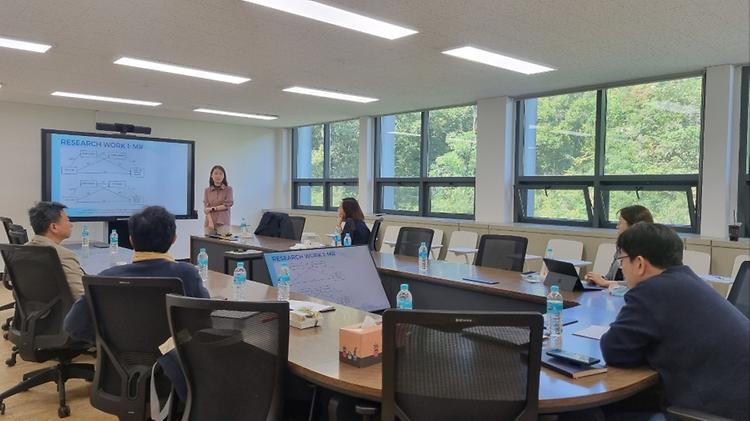
- College of Social Sciences, 34th Su-Seon Forum Completed On Thursday, November 20, the College of Social Sciences (Dean: Professor Yun Bi) held the 34th Susun Forum in the Conference Room of the Institute for Social Sciences, located in Susun Hall on the Humanities and Social Sciences Campus. At this forum, Professor Da-Eun Park from the Department of Psychology delivered a presentation titled “You Have Every Right to Feel: Emotional, Cognitive, and Behavioral Changes Following Emotional Validation.” Professor Park presented research demonstrating the positive effects of emotional validation among young children and adolescents. Faculty members and researchers in attendance discussed how emotional validation influences resilience and sustained effort in challenging situations. They also engaged in active conversations regarding future research directions and the potential for further expansion of related studies. The Susun Forum, organized by the Institute for Social Sciences (Director: Professor Jae-Kuk Lee), has been held monthly since the first semester of the 2021 academic year. Under the overarching theme of “Community and Social Sciences,” the forum serves as a platform for sharing research outcomes from scholars within the College of Social Sciences and fostering academic exchange. With the 34th session, the 2025 Susun Forum series has come to a close, and the next forum is scheduled to take place in the first semester of the 2026 academic year.
-
- 작성일 2025-11-21
- 조회수 128
-
- ‘2025 Proud Sungkyun Journalists Award’ Ceremony to Be Held on November 24
- ‘2025 Proud Sungkyun Journalists Award’ Ceremony to Be Held on November 24 — Lee Jae-gyo (Editor-in-Chief, Munhwa Ilbo), Lee Cheon-jong (Editor-in-Chief, Segye Ilbo), Lee Young-jin (Former Justice of the Constitutional Court), Yoo Sang-soo (CEO, Samil PwC) ▲ (From left) Lee Jae-gyo (Editor-in-Chief of Munhwa Ilbo), Lee Cheon-jong(Editor-in-Chief of Segye Ilbo), Lee Young-jin(Former Justice of the Constitutional Court) and Yoo Sang-soo(CEO of Samil PwC) The Sungkyun Journalists Association—an organization of media professionals who graduated from Sungkyunkwan University (SKKU) and chaired by Lee Jong-hwan—announced on November 20 that the recipients of the 2025 Proud Sungkyun Journalists Award are Lee Jae-gyo, Editor-in-Chief of Munhwa Ilbo, and Lee Cheon-jong, Editor-in-Chief of Segye Ilbo in the journalism category; and former Constitutional Court Justice Lee Young-jin and Samil PwC CEO Yoo Sang-soo in the external achievement category. The awards will be presented at the 2025 Annual General Assembly and Year-End Gala of the association on Monday, November 24 at 7 p.m. in Cho Byung-Doo Hall at the SKKU 600th Anniversary Building. Lee Jae-gyo, Editor-in-Chief of Munhwa Ilbo, joined the newspaper in December 1994 and served as the Washington correspondent for three years starting in July 2012. He subsequently held key editorial positions such as head of the International, Social, and Political desks, demonstrating strong journalistic capability and leadership. Since assuming the role of Editor-in-Chief in June 2025, he has guided the newspaper’s editorial direction and led coverage on key national issues that shape Korea’s public discourse. Lee Cheon-jong of Segye Ilbo began his career at the paper in May 1999. Over the past two decades, he has worked across major reporting divisions—including police and prosecution, investigative reporting, political parties, and economic policy—fulfilling the mission of journalism as a vital public institution. He has served as Editor-in-Chief since September of this year. Lee studied journalism as a visiting scholar at North Carolina State University (2014–2015) and has received multiple major awards, including the 2017 Korea Newspaper Award, the 5th Amnesty International Media Award, and four Journalist of the Month Awards from the Journalists Association of Korea. Lee Young-jin (Judicial Research and Training Institute, Class of 22), currently a distinguished professor at SKKU, is a constitutional scholar who has spent more than 35 years safeguarding the Constitution and protecting fundamental rights in both the judiciary and the Constitutional Court. He placed first in the 32nd National Bar Examination, joined the judiciary, and served in key roles including at the National Court Administration. After serving as a presiding judge at the Seoul High Court, he was appointed a Constitutional Court Justice in 2018. Known for his empathetic approach to adjudication and judicial administration, he has focused on legal education at SKKU’s law school since retiring last year. He recently published Whose Side Is the Constitution On?: Dissenting Opinions and the Protection of Fundamental Rights, a reflection on his six-year tenure on the bench. Yoo Sang-soo, CEO of Samil PwC, is recognized as one of Korea’s leading experts in mergers and acquisitions, contributing for more than 30 years to the growth and advancement of domestic enterprises. Since joining Samil PwC in 1992, he has gained extensive experience through audit and tax advisory work for numerous companies. During and after the Asian financial crisis, Yoo helped transform the domestic M&A landscape—then dominated by foreign investment banks—by positioning Samil PwC as a leading advisory firm. His contributions led to the Presidential Award in 2015. Today, he oversees both the Deals and Markets divisions at Samil PwC. Founded in 1995, the Sungkyun Journalists Association consists of approximately 500 SKKU alumni currently working across more than 30 national daily newspapers, 10 broadcast networks, and major news agencies.
-
- 작성일 2025-11-20
- 조회수 183